
Home / Trucks for / Trucks for Septic and Portable Restroom Service
Trucks for Septic and Portable Restroom Service
What the work needs, which truck types fit, and what to check before you buy. Live stock from our lot.
What the work needs
Pumping septic tanks and servicing portable restrooms means moving liquid waste over short, frequent routes. The truck needs a tank sized for the route, a vacuum pump that handles solids, and a chassis that is easy to park and drive on residential streets and job sites.
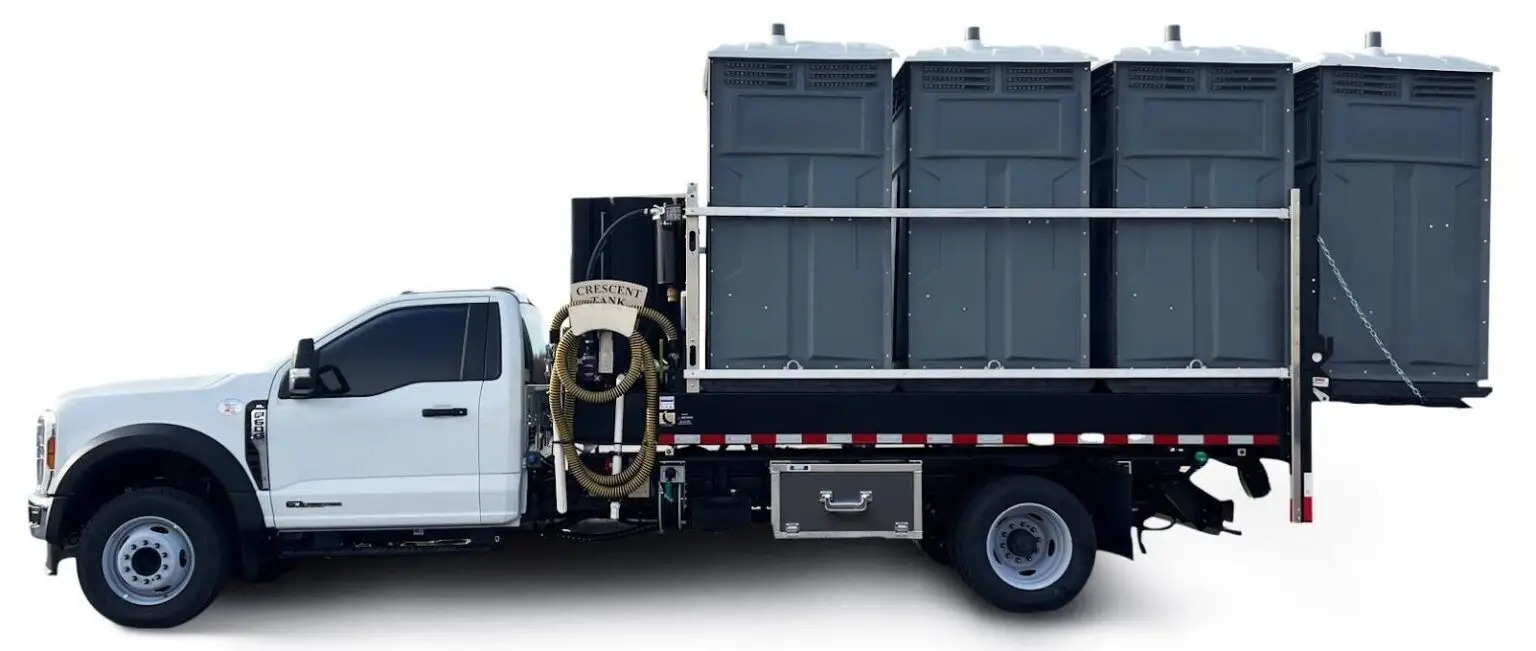
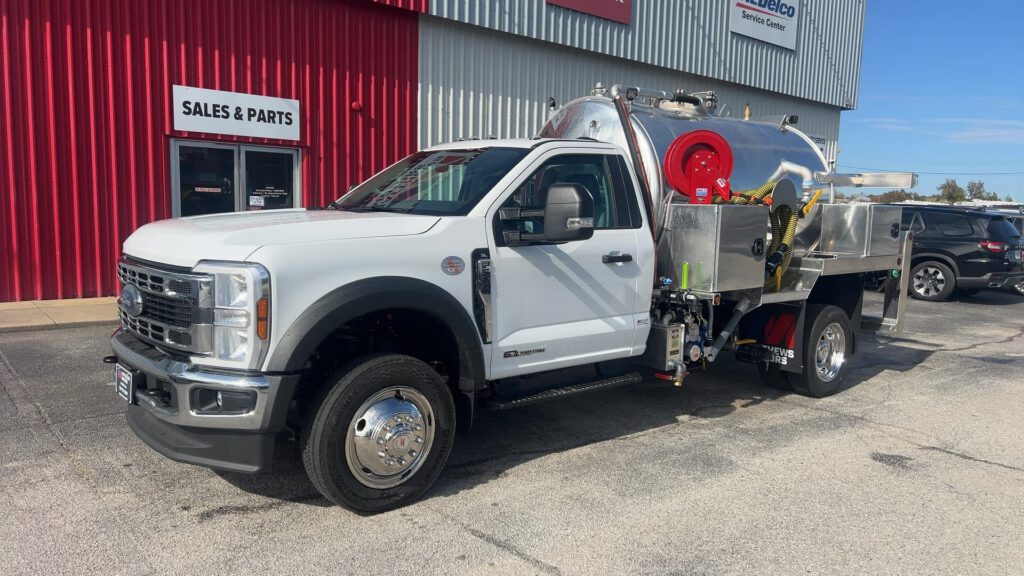
The work splits two ways. Portable restroom crews clean units in place and haul them between sites, so they want a flat tank that doubles as a truck bed. Septic pumpers move larger volumes from residential and commercial tanks to the treatment plant, so they want a round tank with more gallons and a heavier chassis.
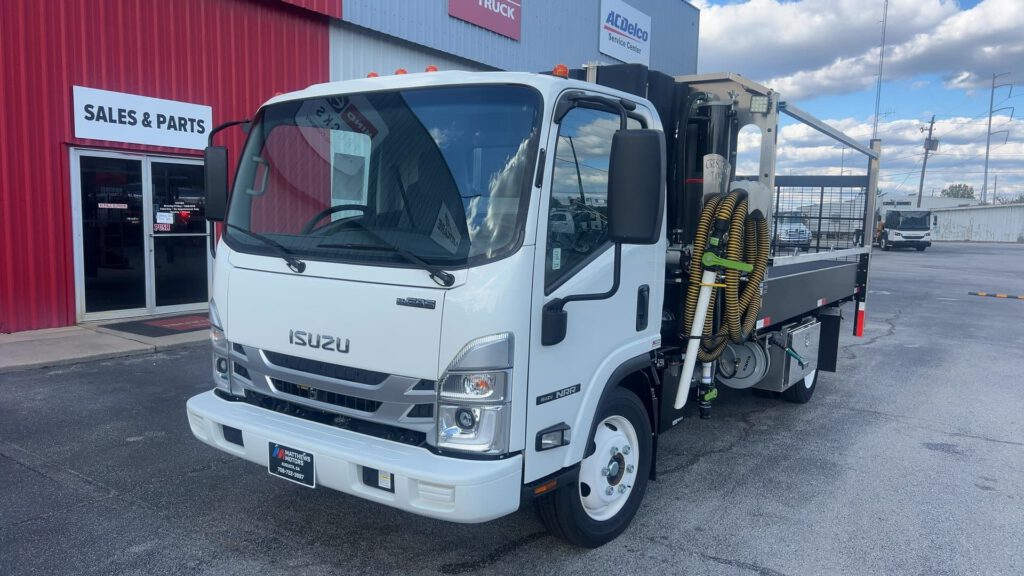
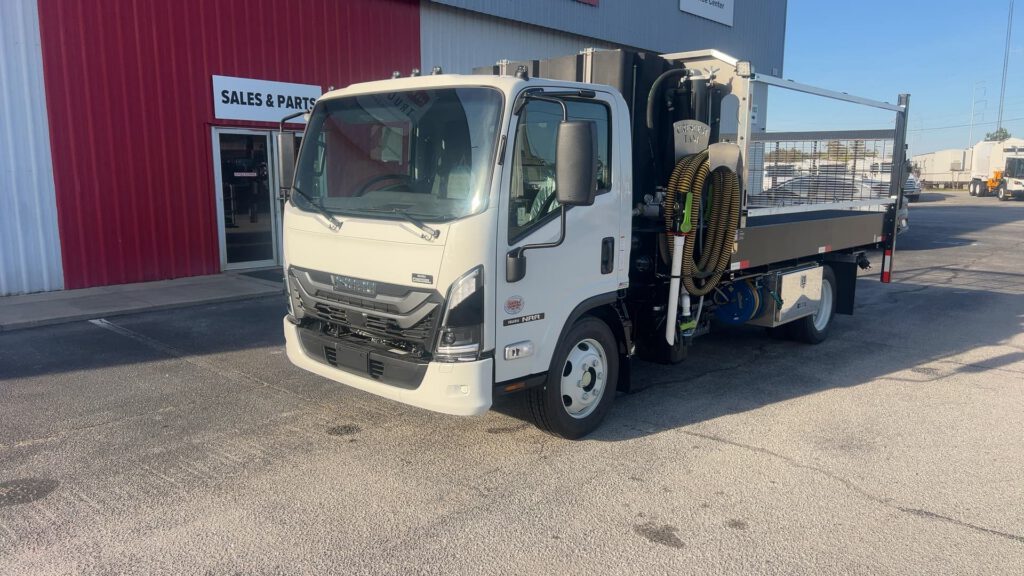
Most small operators start on a cab-forward Isuzu NRR or a Hino L6 with a tank between 800 and 2,500 gallons. The sections below show what to look at, the truck types that fit, and what we have on the lot today.
Tank size
Match gallons to the daily route and the dump site, not the biggest tank.
Pump
Check the vacuum pump make, hours, oil and service history.
Chassis
GVWR decides payload and whether the driver needs a CDL.
In stock now
Before you buy
Flat tank or round tank
A flat vacuum tank sits low behind the cab with a flat deck on top, so the same truck can clean a portable unit on site and carry it to the next job. Our flat-tank builds, such as the Crescent Tank Model 1100, can be mounted on Isuzu, Ford, Ram or Chevrolet chassis, and options include a dual-service vacuum hose on the passenger side, a long Tiger Tail hose with a wand, and a lift gate with a perforated platform for loading units. A round tank carries more liquid for its size and suits septic pumping, grease trap service and larger restroom routes.
What to check before you buy
- Tank: gallons, material, the inside condition, baffles, the sight gauge and every valve.
- Vacuum pump: make and model, hours, the oil system, the relief and check valves, and how it is driven (PTO or a separate engine).
- Hoses and plumbing: the length and condition of the suction hose, the reel, and the fresh-water tank and pump if the truck has one.
- Chassis: GVWR, rear axle rating, tires and brakes. A full tank is the heaviest load the truck will ever carry.
- Paperwork: service records for the truck and the pump, and the permits your county or state asks of septage haulers.
After the sale
Matthews has a service department, a parts counter, an upfit shop and mobile truck repair in the same place, so the truck, the tank and the pump can be kept on the road after you buy it. If what you need is not in stock, tell us the tank size and chassis and we will look for it or have one built.
Common questions
Do I need a CDL to drive a vacuum or septic truck?
A commercial driver's license (CDL) is generally required above 26,000 pounds gross vehicle weight rating (GVWR). The Isuzu NRR is rated at 19,500 lb, and many Hino L6 and L7 tank builds are rated just under the line, so they can be driven without a CDL. Check the GVWR on the door-jamb label of the truck you are looking at, and remember that a full tank is heavy: septage weighs about 8.5 lb a gallon, so 2,000 gallons is roughly 17,000 lb of load.
What size tank should I buy?
Start from the route: how many stops a day, how many gallons each one produces, and how far the dump site is. A tank you can fill and empty twice a day often beats a bigger one you only half fill. Restroom routes usually run smaller flat tanks; septic pumping usually runs 1,500 gallons and up on a heavier chassis.
Should I buy a flat tank or a round tank?
A flat tank doubles as a deck, so you can carry portable units and clean them on site with one truck. A round tank holds more liquid for its size and suits septic pumping and grease traps. Call (706) 722-3997 and tell us your work; we will show you the trucks that fit.
Talk to someone who sells these every week
Need a truck built to the job? Send the spec and a truck specialist will call.
Call (706) 722-3997Talk to a truck specialist
Build one to your spec
Tell us the work and the body. A truck specialist calls you back with options, build time and a quote.