If you run portable restrooms—or you’re thinking about getting into the business—the truck you choose matters.
Your service truck is the backbone of the whole operation. It’s what keeps routes moving, toilets clean, and customers happy. When the truck runs well, the day goes smoothly. When it doesn’t, the whole route can fall apart.
Not all sanitation trucks are built the same. The chassis, tank design, vacuum pump, and service setup all affect how efficiently your crew can work.
At Matthews Motors, we work with sanitation operators and municipalities to build trucks that are designed for real routes and real workloads. Here are a few of the main things operators should understand when choosing a portable restroom service truck.
Cab-Over vs. Conventional Chassis
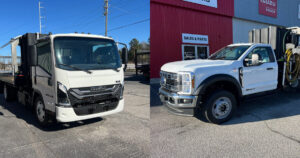
One of the first decisions operators face is choosing between a cab-over truck and a traditional chassis truck.
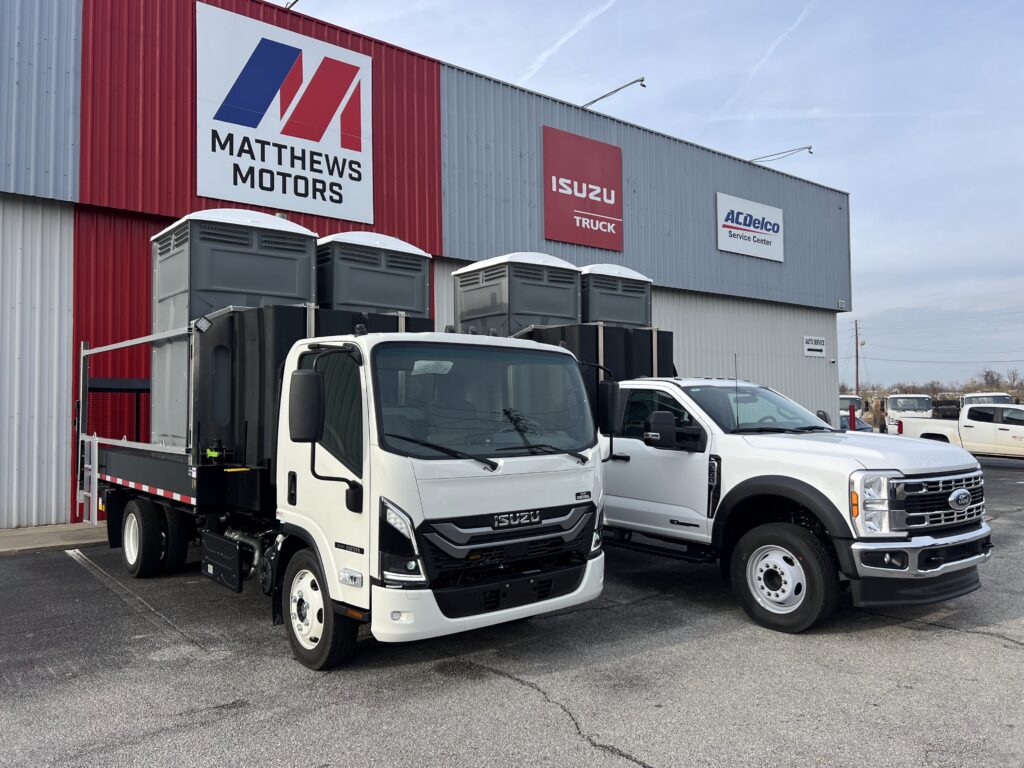
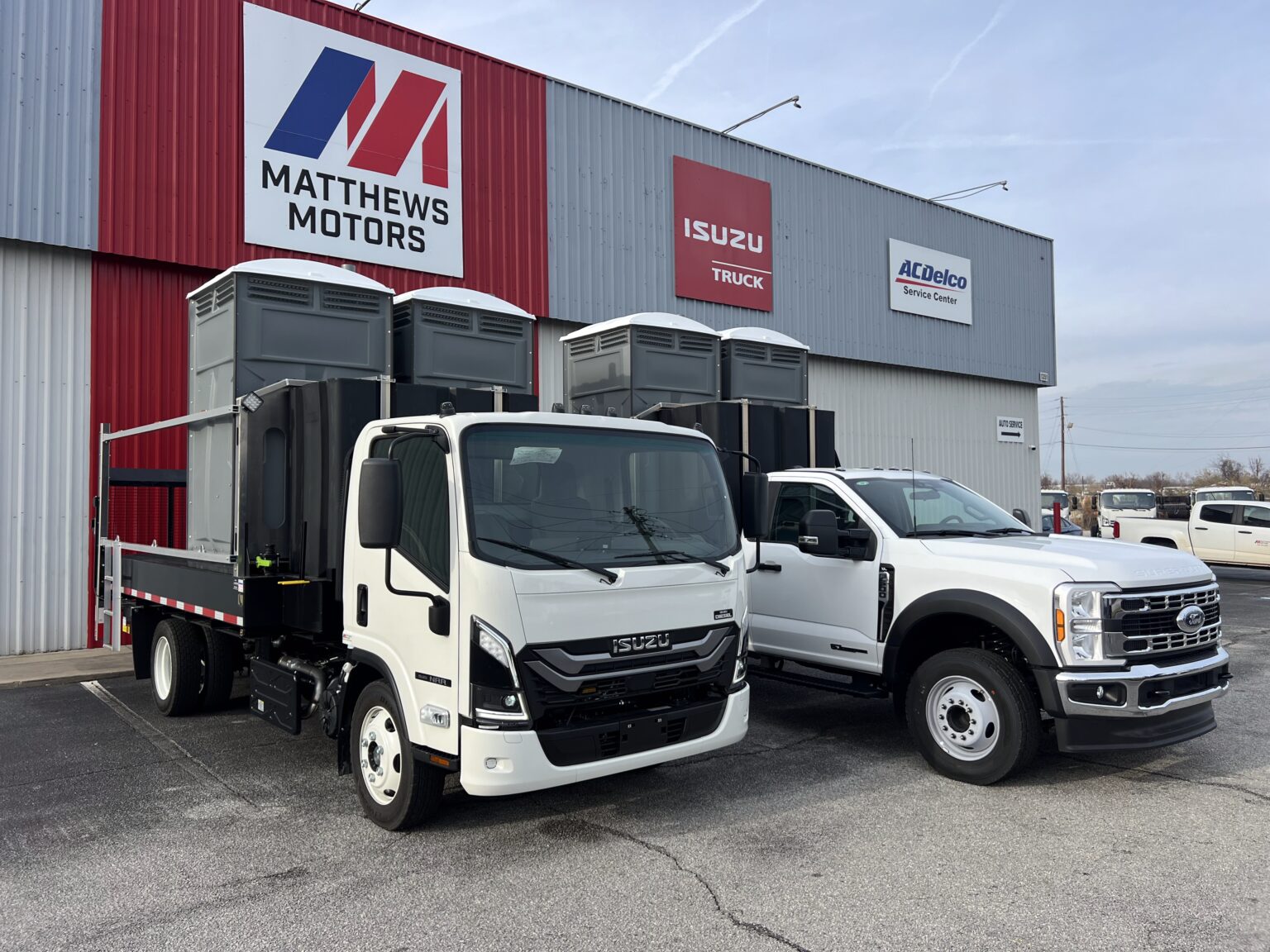
Cab-over trucks like Isuzu low cab-forward models are popular in sanitation work because they’re easy to maneuver. Since the cab sits directly over the engine, these trucks offer:
-
Tight turning radius
-
Easier movement through crowded job sites
-
Better visibility in tight spaces
That makes them useful for servicing downtown areas, festivals, and construction sites where space is limited.
Traditional chassis trucks like Ford commercial trucks are another common option. Operators often choose them when they need:
-
4×4 capability
-
Larger truck configurations
-
Access to a wide commercial service network
Some companies simply prefer the platform they already run in their fleet.
Flat Tanks vs. Round Tanks
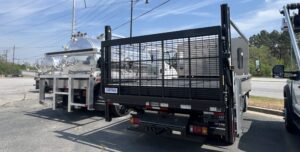
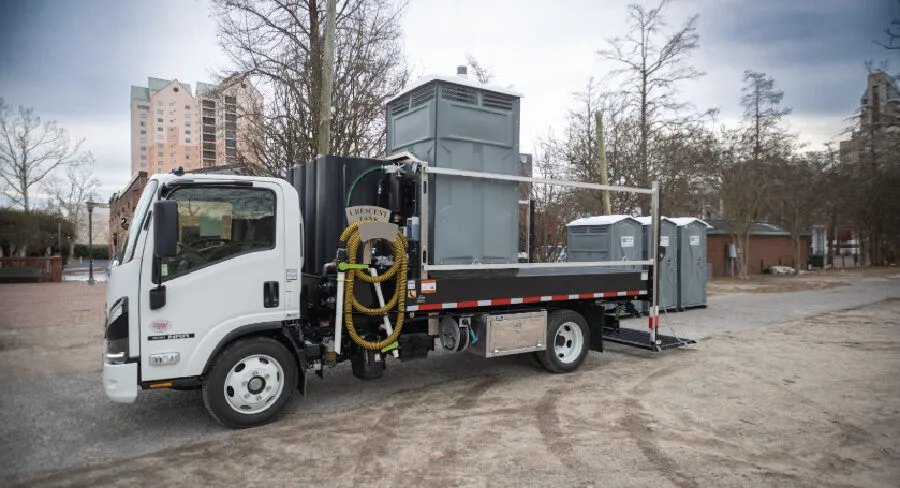
Another big decision is the type of vacuum tank. Older vacuum trucks often use large round tanks, but many portable sanitation trucks today use flat tanks instead. Flat tanks work well in portable sanitation because they allow operators to carry toilets on the truck itself.
That means the same truck can:
-
Service portable restrooms on a route
-
Deliver units to a job site
-
Pick up units after an event
Most flat tank sanitation trucks can carry six to eight portable restrooms on the deck, depending on how they’re set up. For many companies, that flexibility makes a big difference during busy seasons.
Tank Size and Route Planning
Tank capacity determines how many toilets you can service before heading to the dump station.
A common setup for portable sanitation trucks includes:
-
750-gallon waste tank
-
350-gallon fresh water tank
With normal usage, that setup usually supports about 100 toilets on a route. Of course, every route is different. A construction route might stay pretty consistent. But if you’re servicing a festival or race event, the waste volume can increase quickly.
Experienced route drivers learn to estimate tank usage based on:
-
Event size
-
How often the toilets are serviced
-
How long units have been sitting
Knowing your routes is just as important as knowing your truck.
How the Vacuum Pump System Works
The vacuum pump is what makes the whole sanitation truck work. It creates suction that pulls waste out of the portable restroom and into the holding tank. Several parts of the system help protect the pump while it runs.
Float Ball Shutoff
Inside the tank is a floating ball that rises as liquid levels increase. Once the tank reaches capacity, that ball seals the vacuum line and prevents liquid from entering the pump. That protects the pump from serious damage.
Secondary Traps
Secondary traps catch small amounts of moisture and debris before they reach the pump. Operators usually drain these traps at the end of the day.
Pump Flush System
Many sanitation trucks include a flush system that keeps the pump lubricated and helps prevent corrosion. With regular use and proper maintenance, vacuum pumps can last five years or more.
Routine Maintenance
The good news is sanitation trucks don’t require complicated maintenance.
Daily checks usually include:
-
Draining moisture traps
-
Checking pump lubrication
-
Flushing the pump system
-
Looking over hoses and strainers
Most operators also perform a deeper inspection every six months to check valves, strainers, and vacuum components. Staying on top of maintenance keeps the truck on the road and prevents expensive repairs.
Single-Service vs. Dual-Service Trucks
Portable restroom trucks can be built with single-service or dual-service systems. A single-service truck allows operators to service toilets from one side. Dual-service trucks add a second hose reel and valve system on the other side of the truck. That setup allows crews to service units from both sides at the same time.
This works especially well for larger setups like:
-
Festivals
-
Construction sites
-
Large event venues
When toilets are lined up in rows, dual-service trucks can cut route time significantly.
Can These Trucks Pump Grease or Septic?
Portable restroom trucks are designed mainly for liquid waste from portable toilets.
Grease traps and septic systems usually require:
-
Larger vacuum pumps
-
Larger tanks
-
Different disposal procedures
While a sanitation truck might handle an occasional small grease job, companies that focus on grease routes typically run trucks built specifically for that work.
Built for Real Routes
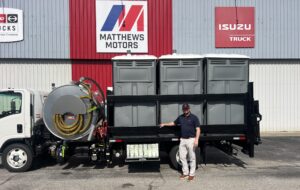
Every sanitation company runs a little differently. Some focus on construction routes. Others handle large events or municipal contracts. Choosing the right truck setup helps operators run efficient routes and avoid unnecessary downtime. At Matthews Motors, we work with sanitation operators and municipal fleets to build trucks designed for the way crews actually work in the field.
If you’re planning your first sanitation truck—or expanding your fleet—our team can help you find the setup that fits your operation.