The Demands of Portable Restroom Service
Portable restroom service providers face more pressure than ever. Jobsites expect faster service, schedules keep getting tighter, and fuel and labor costs continue to rise. A portable restroom vacuum truck gives operators a way to haul units and service them in the same stop, so crews can serve more locations without draining their equipment, labor hours, or margins.
Getting the job done is no longer enough. You also need to complete each route efficiently, economically, and reliably.
This is where your fleet can either become a competitive advantage — or a costly bottleneck.
Why Portable Restroom Routes Become Inefficient
Traditional service models rely on separate vehicles. One truck or trailer hauls the portable restrooms, while another truck services them.
That fragmented system no longer matches the demands of modern routes. It requires more trips, more fuel, more labor hours, and more coordination. Ultimately, it leaves less profit in every job.
But what if one truck could handle both tasks in a single trip?
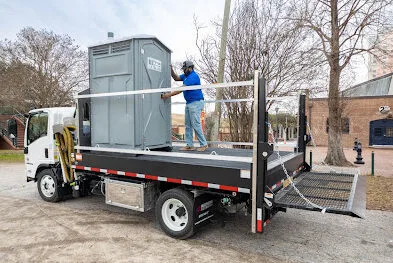
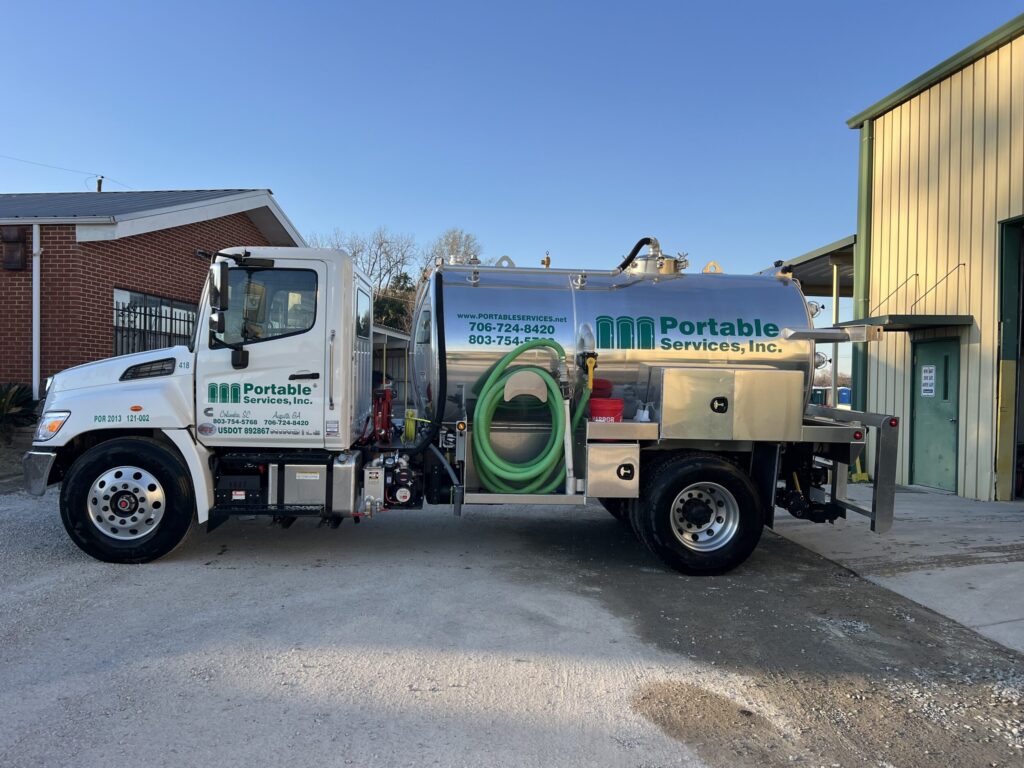
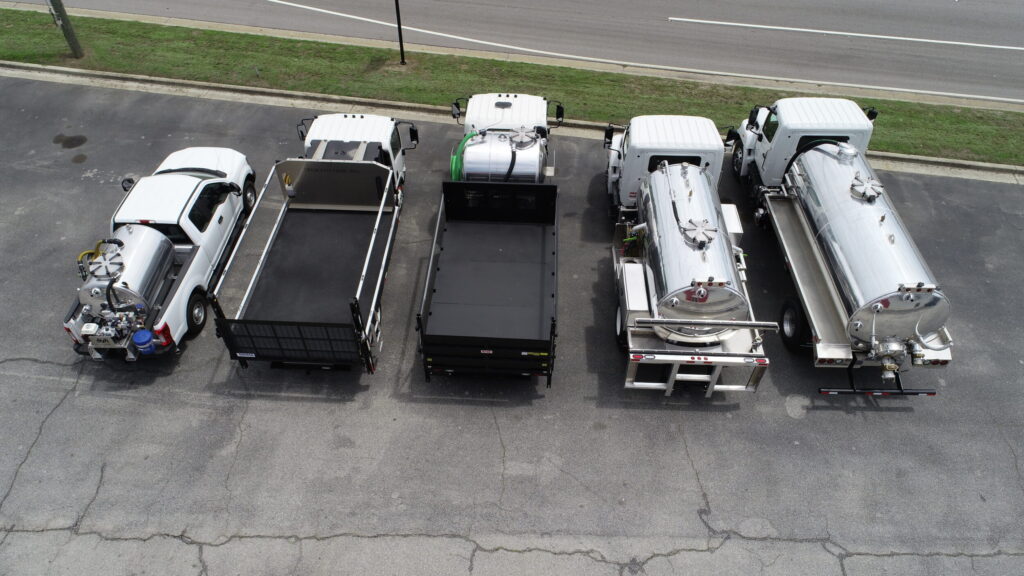
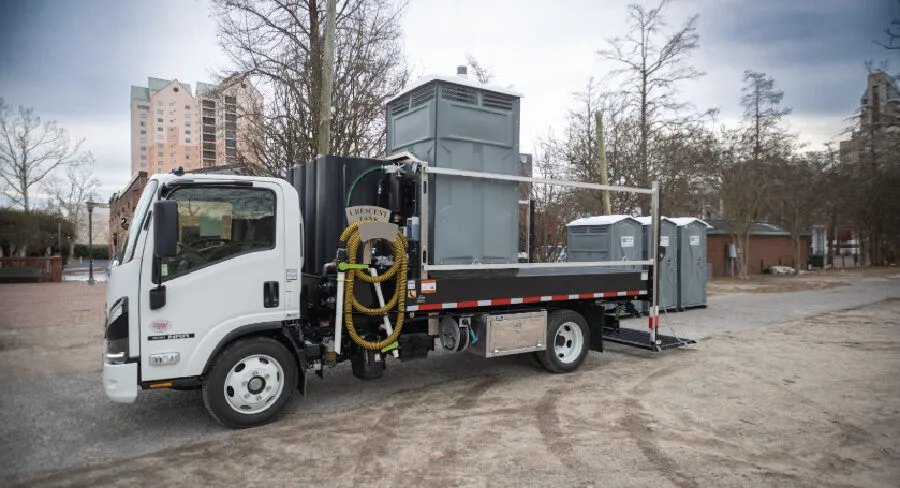
Matthews Motors portable restroom vacuum trucks offer a patented solution to this long-standing industry problem. These flat vacuum tank trucks allow operators to haul and service portable restrooms during the same visit.
Instead of sending two vehicles and two drivers, you can send one operator in one truck.
Two Vehicles Create Twice the Work
Experienced portable sanitation operators know how frustrating it can be to manage separate hauling and service trucks.
Traditional vacuum trucks can pump, rinse, and recharge portable restrooms. However, they cannot carry a full load of units. Therefore, operators often need a separate flatbed truck to deliver or pick up restrooms.
That means:
- Two vehicles
- Two drivers
- Two schedules
- Two trips to the same location
Now multiply that process by dozens of weekly deliveries, especially during busy construction and event seasons. Those extra trips quickly add hundreds of labor hours, thousands of dollars in fuel, and unnecessary wear on your equipment.
In addition, your dispatcher must coordinate both trucks so they arrive at the same location at the right time. One delayed vehicle can throw off the entire route.
Single-Purpose Vehicles, Double the Headaches
Conventional vacuum tank trucks serve one primary purpose: servicing portable restrooms. They pump out waste, rinse the units, and prepare them for continued use.
However, they cannot deliver or retrieve the restrooms themselves. When a route includes delivery or pickup, another member of your team must make a separate trip.
That creates several problems:
- Fleet inefficiency: Two trucks perform work that one truck could potentially handle.
- Higher fuel consumption: Your team drives twice the miles for one job.
- Staffing challenges: You must schedule and manage additional drivers.
- Lost productivity: Extra trips limit the number of jobs your team can complete each day.
For growing operators, these inefficiencies create a serious barrier to expansion. You cannot serve more customers without adding more trucks, more employees, and more overhead.
In today’s competitive market, that model simply does not scale well.
Missed Trips Mean Missed Revenue
Every unnecessary trip cuts into your profit margin.
For example, when one truck services a site and another truck delivers restrooms to that same location, your company spends additional time and money without generating additional revenue. A job that could have taken one visit now requires hours of extra coordination.
Meanwhile, customers increasingly expect fast, flexible, and reliable service. Traditional trucks may have served operators well in the past, but they cannot always meet the demands of high-volume routes.
A portable restroom vacuum truck solves that problem by combining hauling and servicing capabilities on one platform.
As a result, operators can eliminate the need for two trucks, two drivers, and two separate trips.
How a Portable Restroom Vacuum Truck Combines Two Jobs
Identifying an inefficient process is easy. Eliminating it requires the right equipment.
Matthews Motors designed its patented flat vacuum tank trucks to change the way portable sanitation companies manage their routes. Rather than making small adjustments to the traditional model, these trucks combine two essential functions in one rugged, road-ready platform.
Your operator can haul portable restrooms and service them during the same visit.
That means no more dispatching multiple trucks, splitting crews, or rearranging schedules. Instead, you get one operator, one vehicle, and one efficient stop.
How the Flat Vacuum Tank System Works
The system combines a flatbed hauling surface with integrated vacuum tank functionality.
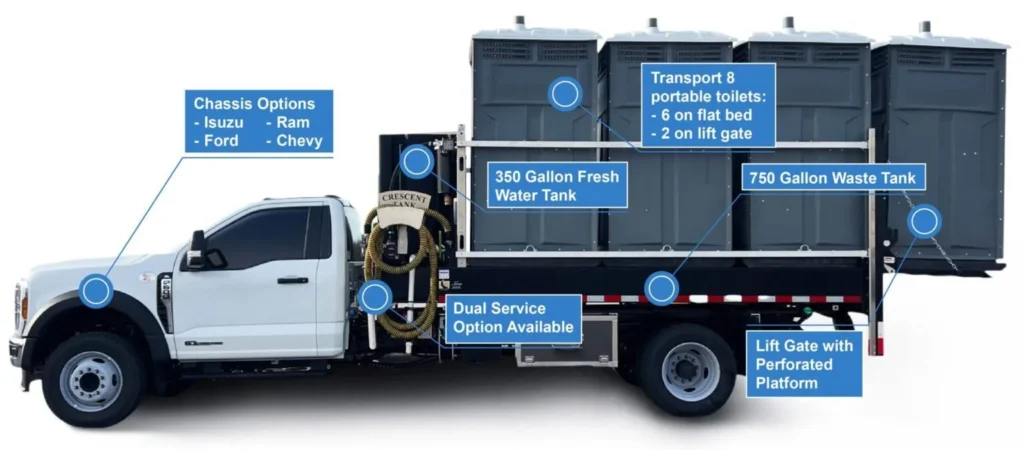
The flatbed can typically carry six to eight portable restrooms. Meanwhile, the flat vacuum tank gives operators the equipment they need to pump, rinse, and recharge units in the field.
Because the tank sits flat, it maintains weight balance without taking away valuable cargo space. Operators can also reach the hoses, controls, and safety systems quickly while working on demanding jobsites.
During one stop, an operator can:
- Deliver clean portable restrooms
- Pump and service units already onsite
- Remove damaged or end-of-cycle units
Therefore, your team can complete more work without sending another vehicle.
Benefits of a Flat Vacuum Tank Truck
Combining hauling and servicing allows operators to build tighter routes and shorten service windows. It also gives customers a faster, more professional experience.
Instead of planning around the limitations of separate vehicles, your fleet can adapt to the actual needs of each jobsite.
For example, a traditional two-truck route may require one driver to deliver units and another driver to return later for service. With a flat vacuum tank truck, one operator can complete both tasks during the same visit.
| Traditional Service Model | Flat Vacuum Tank Truck |
|---|---|
| Two vehicles | One vehicle |
| Two drivers | One operator |
| Separate delivery and service trips | Delivery and service in one stop |
| More fuel consumption | Fewer route miles |
| More scheduling coordination | Simpler dispatching |
| Fewer completed jobs per day | Greater route capacity |
This hybrid functionality represents more than a convenient feature. It creates a completely different operating model.
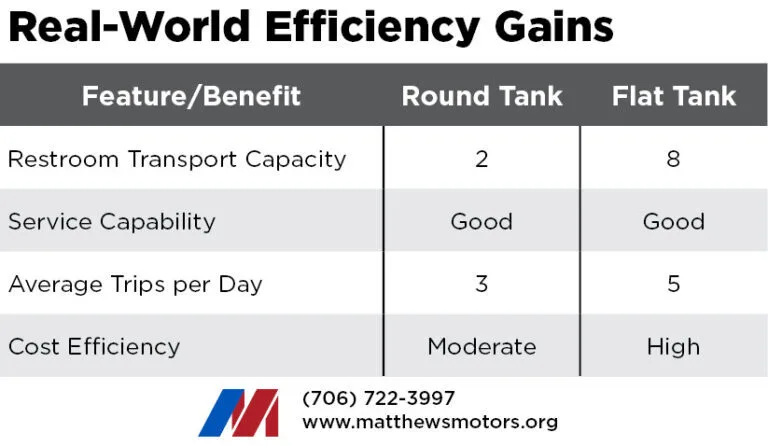
In many operations, flat vacuum tank trucks can help teams complete 30% to 50% more service calls per day, especially during busy seasons such as summer festivals, major events, and construction surges.
An operator who previously completed three round trips may be able to complete five without sacrificing service quality.
In addition, every avoided trip saves fuel, labor time, and wear on your equipment. Those savings become even more important as wages and operating costs continue to rise.
Most importantly, your team can spend more time serving customers and less time driving back and forth between the same locations.
Why the Matthews Motors Portable Restroom Vacuum Truck Stands Alone
When you need a portable restroom vacuum truck that can haul and service units in one trip, Matthews Motors offers a solution you will not find anywhere else.
We do not simply sell a truck. We deliver a fully integrated, ready-to-work system that we designed specifically for portable restroom operators.
Our patented flat vacuum tank truck combines hauling and servicing capabilities in one purpose-built platform.
Built for Portable Restroom Service
This truck is not a standard flatbed with a tank added as an afterthought.
Our team engineered the complete system from the ground up. We designed the layout, tank configuration, hauling surface, controls, and service components to work together in demanding field conditions.
Because Matthews Motors owns the design and the process, you will not find this truck on another dealer’s lot or through a major OEM.
You work directly with the team that developed the solution, understands the application, and knows the problems it needs to solve. For broader industry standards and best practices, operators can also turn to resources like the Portable Sanitation Association International (PSAI).
Your Portable Restroom Vacuum Truck, Ready From Day One
Every Matthews Motors flat vacuum tank truck arrives ready to haul, pump, and work.
Whether you operate one truck or manage a growing fleet, we customize the build around your daily routes and service requirements. Our team pays attention to the details, from the equipment layout to the final welds, so your operators can work safely and efficiently.
In addition, we provide the training, service, and support needed to keep your truck working.
You will not become another number in a large system. When you buy from Matthews Motors, you work with a team committed to helping your operation succeed.
One Portable Restroom Vacuum Truck. One Trip. Less Overhead.
This truck does not fit neatly into a traditional product category because it creates a category of its own.
It combines the hauling capacity of a flatbed with the service capabilities of a vacuum truck. As a result, it gives portable restroom operators a practical way to reduce route miles, simplify staffing, and increase daily capacity.
You cannot price-shop it against a traditional vacuum truck because a traditional truck cannot do the same job.
Find the Right Portable Sanitation Truck
If you are tired of juggling multiple trucks, coordinating extra trips, and watching operating costs eat into your margins, it may be time to change the way your fleet works.
A Matthews Motors portable restroom vacuum truck does more than upgrade your equipment. It can improve your entire operating model.
You get:
- Fewer unnecessary trips
- More efficient routes
- Less scheduling complexity
- Better use of each labor hour
- Greater profit potential
Every day you wait is another day your routes may cost more than they should.
Let’s fix that.
Click below to request a customized quote and learn how a flat vacuum tank truck can transform your fleet.
Get a Quote on Your Build