The Real Cost of Run-to-Fail Fleet Maintenance
If your fleet still runs on a “fix it when it breaks” model, you’re paying more than you think. When it comes to preventative maintenance vs reactive repairs, the repair invoice is only the visible part of the bill.
An unscheduled breakdown usually means:
- Missed deliveries and blown job schedules
- Customer penalties
- Tow fees
- Emergency labor rates
- Downtime that eats straight into profit
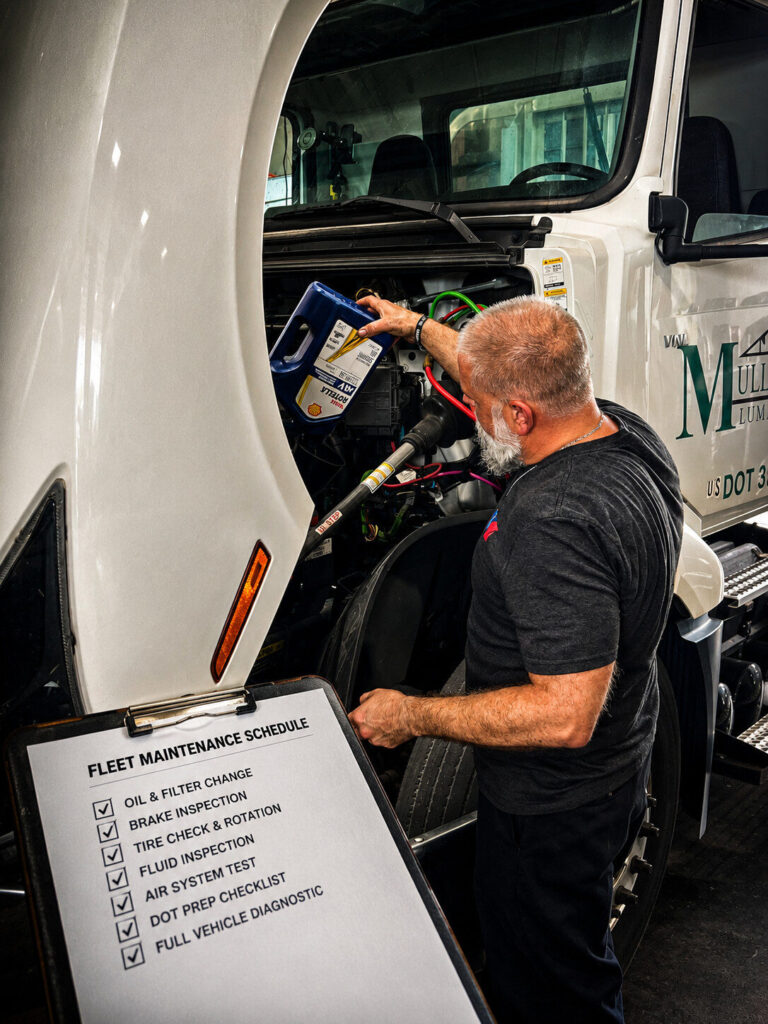
Preventative maintenance — regular, scheduled fleet service — keeps your trucks operational, DOT compliant, and earning. Here’s how the two approaches compare.
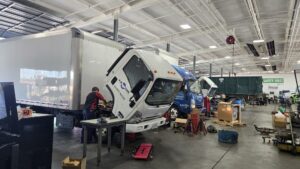
Preventative Maintenance vs Reactive Repairs: Head-to-Head
| Category | Preventative Maintenance | Reactive Repairs |
|---|---|---|
| Cost Predictability | High | Low |
| Downtime Impact | Minimal (scheduled) | Severe (unexpected) |
| Safety & DOT Compliance | High (proactive) | Low (violation risk) |
| Repair Costs | Lower over time | Higher (catastrophic failures) |
| Technician Availability | Guaranteed (scheduled) | Limited (rush calls) |
The part that fails on a shop lift is cheap. The same part failing at highway speed is not.
What Preventative Maintenance Prevents on Light- and Medium-Duty Trucks
Whether you’re running work vans, box trucks, dump bodies, or vocational units, the pattern repeats across every system on the truck: a small, scheduled preventative maintenance task replaces a large, unscheduled repair.
- A scheduled oil change instead of an engine rebuild
- A brake pad inspection instead of a full drum and disc replacement
- A DOT annual inspection instead of a failed roadside inspection, a fine, and an out-of-service order
- A battery and electrical check instead of a no-start tow on the shoulder of I-20
Why Reactive Maintenance Costs More Than the Invoice Says
With reactive maintenance, when a truck goes down without warning, the repair itself is rarely the expensive part. The costs that hurt are the ones nobody quotes you:
- After-hours and emergency labor. Rush work carries rush pricing.
- Towing. A truck that can’t move has to be moved by someone else.
- Expedited parts. Overnight freight on a part you’d have had in stock with notice.
- A substitute truck. Renting capacity, or running short and falling behind.
- A driver on the clock, not moving. Paid hours with nothing to show for them.
- The customer who reschedules. Then reschedules with someone else.
A preventative maintenance program trades those unknowns for a line item you can budget and plan around. You choose the day the truck comes out of service instead of the truck choosing for you.
Long-Term Benefits of a Fleet PM Program
The advantages of preventative maintenance compound well past the first year:
- Lower total cost of ownership per unit
- Higher resale value at trade-in
- Better driver retention — fewer roadside headaches
- Stronger FMCSA and DOT audit scores
- A documented service history when an auditor, an insurer, or a buyer asks for it
Fleet Service Agreements in Augusta, GA — and 175 Miles in Every Direction
Matthews Motors has served fleet operators, contractors, and municipalities across the CSRA since 1991. We service everything we sell, from light-duty to heavy-duty work trucks. Mobile service and in-shop bays are both available, so PM happens on your yard or ours — whichever costs you less uptime.
We build fleet service agreements that lock in your preventative maintenance schedule, keep emergencies off your calendar, and produce the compliance paperwork before anyone asks for it.
Request a custom fleet maintenance evaluation | (706) 722-3997 | 1351 Gordon Highway, Augusta, GA 30901